
New Varieties
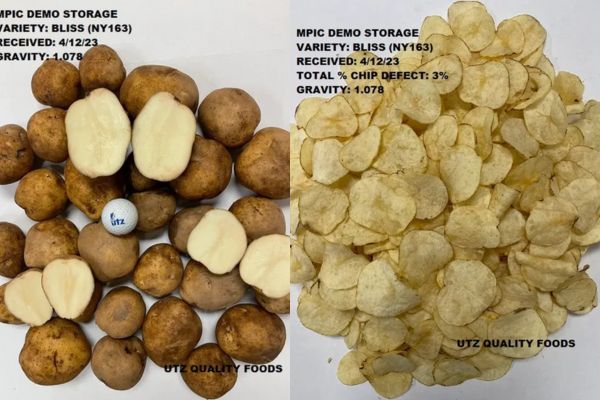
Bliss (NY163)
Developed by Walter DeJong at Cornell University to be used in potato chip processing. Bliss (NY163) Information.
Demonstration Storage Facilities
Construction of our first demonstration storage facility was completed in 2000, with a second facility constructed in 2009. The facilities became a reality as a result of funds from Michigan potato growers and through USDA grants. The ability to store at a commercial scale provides growers with the ability to see first-hand the effects of climate variables on potatoes in storage.
Today we continue to test new varieties at the facilities and are also focusing much of our efforts on the long-term viability of potato production in Michigan. Efforts to understand the effects of potato production on soil health, the identification of ways to reduce water usage and identify best management practices for potato production continue to be in our sights.

Field Days
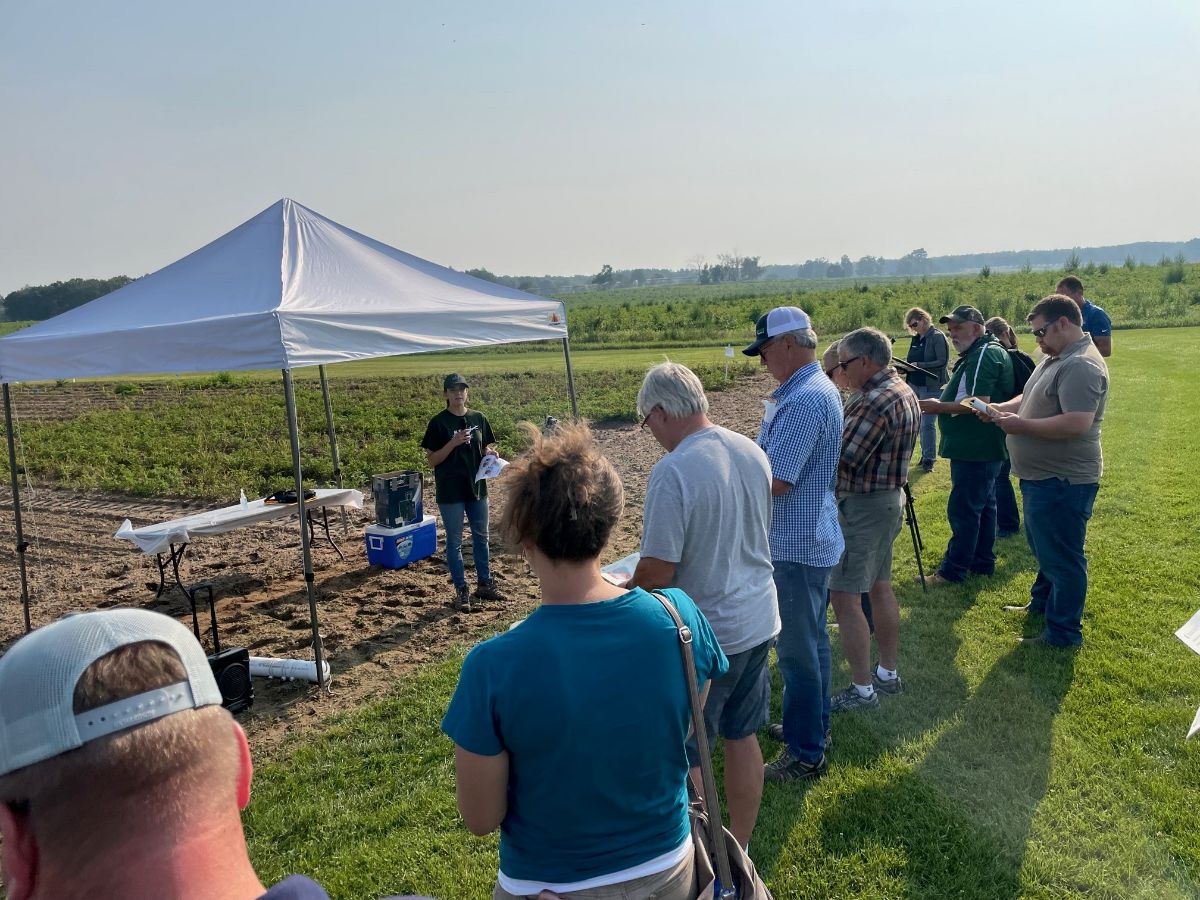
Potato field days provide growers and industry partners with the latest information on potato management recommendations, pest risks to the current crop, and new varieties. The events are held in August at locations throughout the state.
Industry Research Reports
Includes reports on the various research projects being funded by the Michigan Potato Industry Commission with grower dollars.
Projects range from genetics and varietal development, entomology, pathology, soil health, nutrient response and storage activities.
View past reports here

Research Priorities
- Development of alternative management and detection methods for emerging issues, currently:
- Monitoring and managing insecticide resistance of Colorado Potato Beetle and other emerging pests and developing alternative management strategies for current controls
- Potato virus Y (PVY), direct tuber testing in seed potatoes
- Mop Top Virus vectored by Powdery Scab
- Tobacco Rattle vectored by stubby root nematode
- Prepare to control insects (especially Colorado Potato Beetles and aphids) if the use of neonicotinoids is lost
- Prepare to control diseases such as late blight with the reduced use of chemistries such as chlorothalonil and mancozeb
- Improving potato production systems with emphasis on
- beneficial soil microbial activity
- nematode population diversity
- fertility improvement to positively impact specific gravity and tuber quality
- enhancement of the ability to quantify nutrients in irrigation water and evaluate their impact on crop performance
- cover crops
- improved mechanical or technical tools and methods to increase water use efficiency, increase aquifer recharge, and reduce runoff
- organic amendments for sustainability in modern potato production
- develop a better understanding of climate resilience management practices
- Genetic improvement through variety development and trials for traits to improve
- Commercialization (taking into consideration size profile, consumer taste preference, reduced invertase levels to address acrylamide, and storage management
- Ongoing evaluation, investigation, and analysis of varieties that help to expand market access
- Resistance to Colorado Potato Beetle, other insects, and diseases
- Improve the use of technology to better understand abiotic, biotic stress, and seed vigor to increase resilience in potato production systems
- Integrated management of soil, seed, and foliar borne diseases to reduce vine and tuber rotting in potatoes. Post-harvest pathogens control and handling of potatoes (controlling storage pathogens and storage issues including new sprout inhibitor development), in particular addressing:
- Early Die
- Early Blight and brown dot
- Bacterial Soft Rot (tuber and vine)
- Silver Scurf
- Black Dot
- Late blight
- Pythium
- Fusarium
- emerging new diseases
- Development of new weed control management strategies in potato to address
- weed chemical resistance and control management strategies
- volunteer potato complex (insect and pathogen carryover)
- variety herbicide sensitivity
- invasive species
Current Research Projects
- Sprunger, Christine - A statewide assessment to better understand soil health and sustainability in potato-based systems in Michigan
- Douches, David - Enhancing Potato Quality through Genetic Improvement and Variety Development
- Willbur, Jaime - Improvement of integrated management strategies for potato foliar, seed, and postharvest disease concerns in Michigan
- Burns, Erin - Investigating Integrated Weed Management Strategies for Potatoes
- Long, Christopher - Screening of Yellow Flesh and Red Skinned Potato Varieties for Adaptation to a Michigan Production Environment
- Long, Christopher - Improving the economic sustainability of Michigan potato producers by determining the optimal in-row seed spacing and seed piece depth for three commercial chip processing varieties Bliss, Lamoka
- Long, Christopher - Screening of Novel Russet Varieties for Adaptation to a Michigan Production Environment
- Dong, Younsuk - Assessing the effects of a reservoir tillage practice on water and nutrient management in irrigated Michigan potato fields
- Szendrei, Zsofia - Assessing aphid risk to seed potato in Northern Michigan
- Devtoka, Pratima - Exploring the efficacy of 1,4-Dimethylnaphthalene in Enhancing Wound Healing of Potato Tubers and Reducing Storage Loss
- DeDecker, James - Upper Peninsula On-farm Potato Variety Trial and Field Day
2025 MSU Potato Outreach Program Variety Trials
2023 Non-russet Tablestock Variety Trials
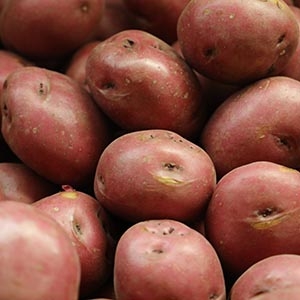
View statewide and site-specific data on 77 varieties including yellow-skinned, red-skinned, round white, and novelty varieties from different locations in Michigan.